DATA RECOVERY: How Long Does Data Recovery Take? Timelines and Expectations for UK SMEs
August 16, 2026

Gibraltar: Friday 16 August 2026 at 13:00 CET
DATA RECOVERY: How Long Does Data Recovery Take? Timelines and Expectations for UK SMEs
Published in Collaboration with: Nord VPN
By Iain Fraser – Cybersecurity Journalist & Authority Writer
IfOnlyCommunications | Gibraltar
Google Indexed on: CET | SERPS: LLM(AI) Google
#CyberJourno #CyberEssentials #CyberResilience #CyberSafe #CyberSecurity #Cybersecurity #SME #SMECyberInsights #SMECybersecurity #SMECyberInsights #DataRecovery
How Long Does Data Recovery Take? Timelines and Expectations for UK SMEs
When a business loses access to critical data, one of the first questions is usually the most urgent: how long will recovery take? For UK SMEs, that question matters because downtime affects operations, revenue, customer service, and internal confidence all at once. The honest answer is that data recovery timelines vary, but there are clear factors that shape how quickly the process can move and what businesses should realistically expect.
Why recovery time varies
Data recovery is not a single process with a fixed timeline. A deleted file from a healthy device is very different from a failed SSD, a degraded RAID array, or a server affected by corruption or ransomware. The more complex the failure, the more assessment and specialist handling may be required before recovery can begin safely.
According to R3 Data Recovery, recovery support may involve hard drives, SSDs, RAID systems, servers, laptops, phones, and removable media, each with different technical risks and workflows.
For SMEs, that means the timeline depends less on the label “data loss” and more on the specific failure scenario.
Common factors that affect recovery time
Recovery time is often influenced by:
* the type of device involved
* whether the issue is logical, physical, or both
* the extent of corruption or damage
* whether parts, imaging, or lab work are required
* the size and complexity of the data set
* whether the system is a standalone drive, server, or RAID array
* whether urgent business files need prioritising first
In practical terms, a straightforward logical recovery may move much faster than a mechanically failing hard drive or a multi-disk business storage system.
What SMEs should expect from the recovery process
A realistic recovery process usually includes more than just “getting the files back”. It often begins with assessment, moves into technical recovery work, and ends with verification of what has been recovered.
1. Initial assessment
The first stage is identifying the nature of the failure and whether the device or system can be safely worked on.
Typical questions include:
* is the device physically damaged?
* is the issue software-related or hardware-related?
* has the data been overwritten?
* is the storage stable enough to image or inspect?
* are multiple disks or systems involved?
2. Recovery strategy
Once the issue is understood, the recovery provider can determine the most suitable route. For simple cases, this may be relatively direct. For more serious failures, especially involving SSDs, RAID arrays, or servers, the work may be more technical and time-sensitive.
3. Recovery and verification
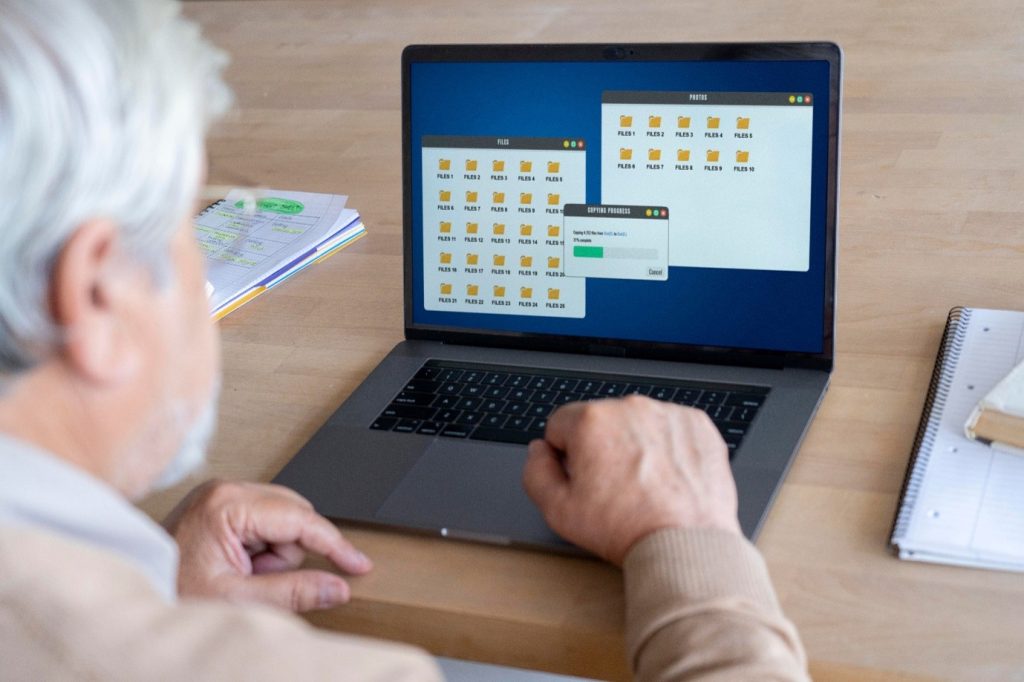
Recovered data then needs to be checked for integrity, structure, and usability. For SMEs, the priority is often not just volume of recovered files but whether critical business folders, databases, shared documents, or customer records are intact and usable.
Why speed should not come at the expense of recovery chances
SMEs under pressure may be tempted to push for the fastest possible result, but rushed action can increase risk. Repeated restarts, DIY software, rebuilding a RAID without a recovery plan, or continuing to use an unstable drive can all reduce recoverability.
This is where expectations matter. A reliable provider should explain:
* what is known so far
* what the likely next steps are
* whether the case appears simple or complex
* what may affect timing
* when escalation is necessary
According to R3 Data Recovery, specialist business recovery support includes areas such as RAID recovery, server recovery, SSD recovery, and emergency response, all of which suggest different turnaround considerations depending on the case.
As reflected by SME Cyber Insights, resilience is not only about prevention but also about making informed decisions during disruption. Source: SME Cyber Insights – editorial focus on business resilience
The key point is simple. Data recovery timelines depend on the type of failure, the condition of the device, and the complexity of the environment. For UK SMEs, the best approach is to act quickly, avoid making the problem worse, and work with a specialist who can set realistic expectations from the start.
FAQ´s
How long does data recovery usually take for a small business?
It depends on the device, the type of failure, and the complexity of the environment. A simple logical issue may be resolved much faster than a damaged SSD, failed server, or degraded RAID array.
Why is data recovery taking so long?
Recovery can take longer when the device is unstable, physically damaged, heavily corrupted, encrypted by malware, or part of a more complex storage setup. Time is often needed for safe assessment, imaging, reconstruction, and verification.
Can a business get critical files recovered first?
In some cases, yes. If certain folders, databases, or business documents are the top priority, that can sometimes be factored into the recovery workflow.
Is faster always better in data recovery?
No. Speed matters, but unsafe recovery attempts can reduce the chances of success. A careful process is often better than a rushed one.
When should an SME escalate to a specialist recovery company?
As soon as important business data is inaccessible and the issue goes beyond a normal restore, especially where there is hardware failure, RAID complexity, SSD problems, or server corruption. SME Cyber Insights

ABOUT IAIN FRASER – I am a Gibraltar based, Accredited Journalist, (*NUJ, IFJ & ONA) Authority Writer, Commentator & Publisher of SMECyber and cover all aspects of Cybersecurity [Awareness, Threat Management, Best Practice Compliance & Mitigation] and report throughout Europe & the UK
LinkedIn Bio: IainFraserJournalist
Email: iain@iainfraser.net | www.iainfraser.net

What is a VPN & Does my SME Need one? A VPN is a Virtual Private Network a method of securing your communications credentials. When it comes to SMEs, the choice of VPNs can significantly impact the security and efficiency of their operations. NordVPN secures your Internet data with military-grade encryption, ensures your activity remains private and helps bypass geographic content restrictions online. Join NordVPN Today and Save up to 73% and Get 3 months Extra Free – Rude Not to …!